The Horch 4 X 4 Type 1a.
.jpg)
Introducing the Horch 4 X 4 Type 1a by Tamiya. Not a glamorous subject like your Tigers and Panthers but a good value for money kit. Planty to do and a nice result. All you could ask from a model don't you think? (And of course) a most suitable subject for towing my 20mm Flakvierling 38

In the end, I went with a 7.5mm Anti-tank gun.


The usual information on the end panels. Just what we need to make our purchasing choices.


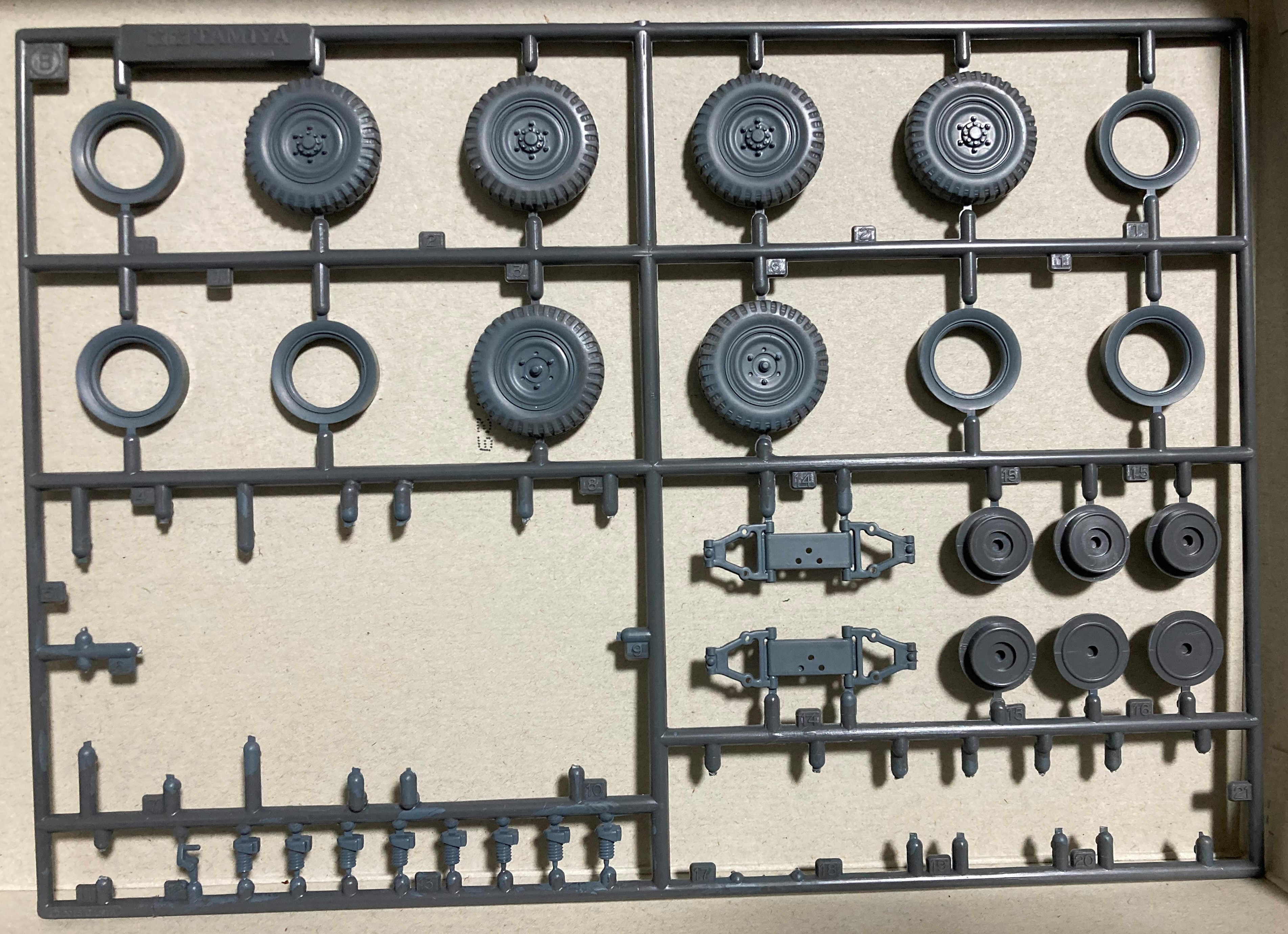
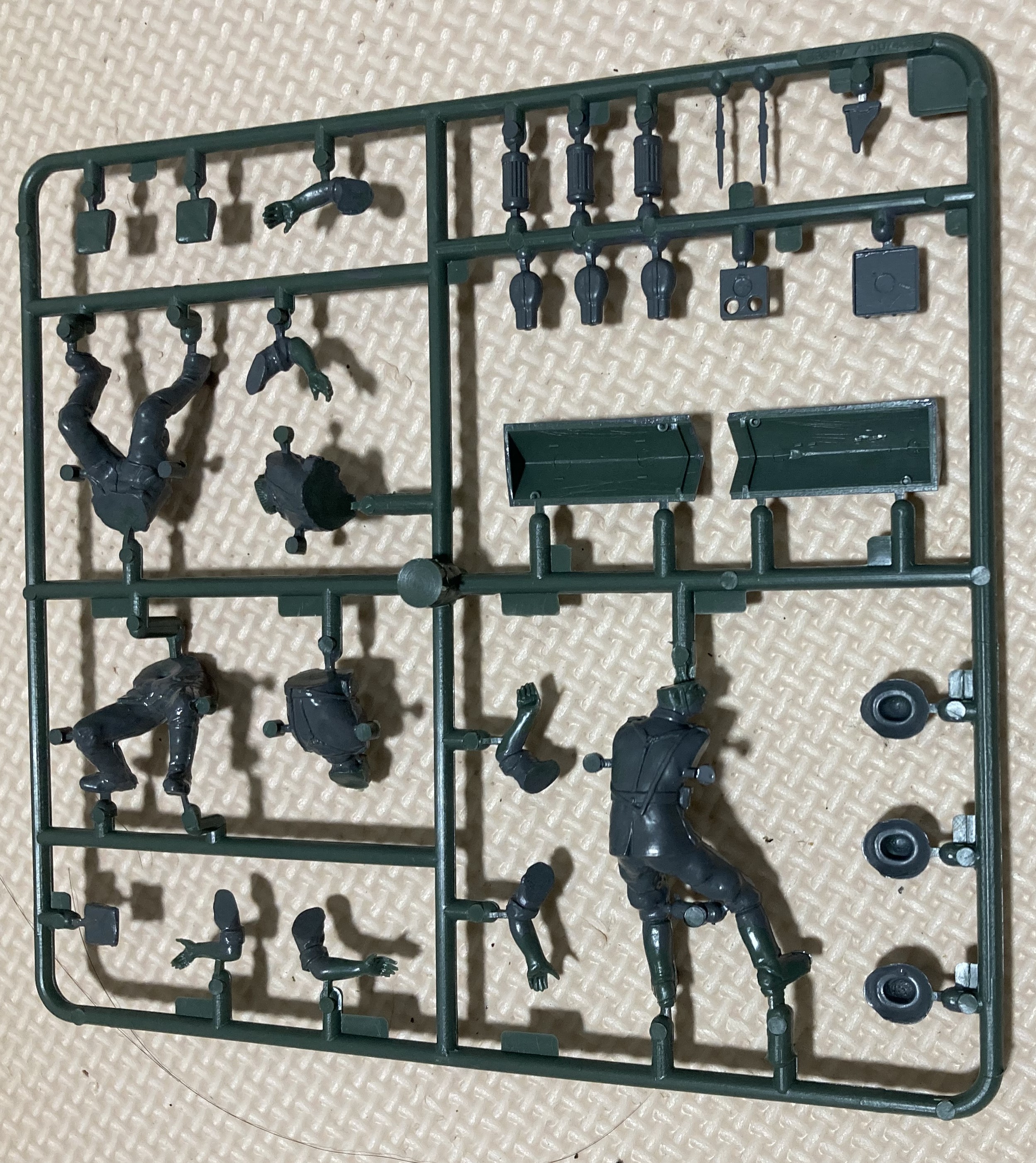
Looking at the sprues in more detail.
There is a diagram, mapping the parts in the instructions if, like me, you can't find parts sometimes.


I think the quality is perfectly satisfactory to very good at a price like this.
There is also a piece of string for the tow rope, a sheet of decals and a sprue of glazing. Nice.
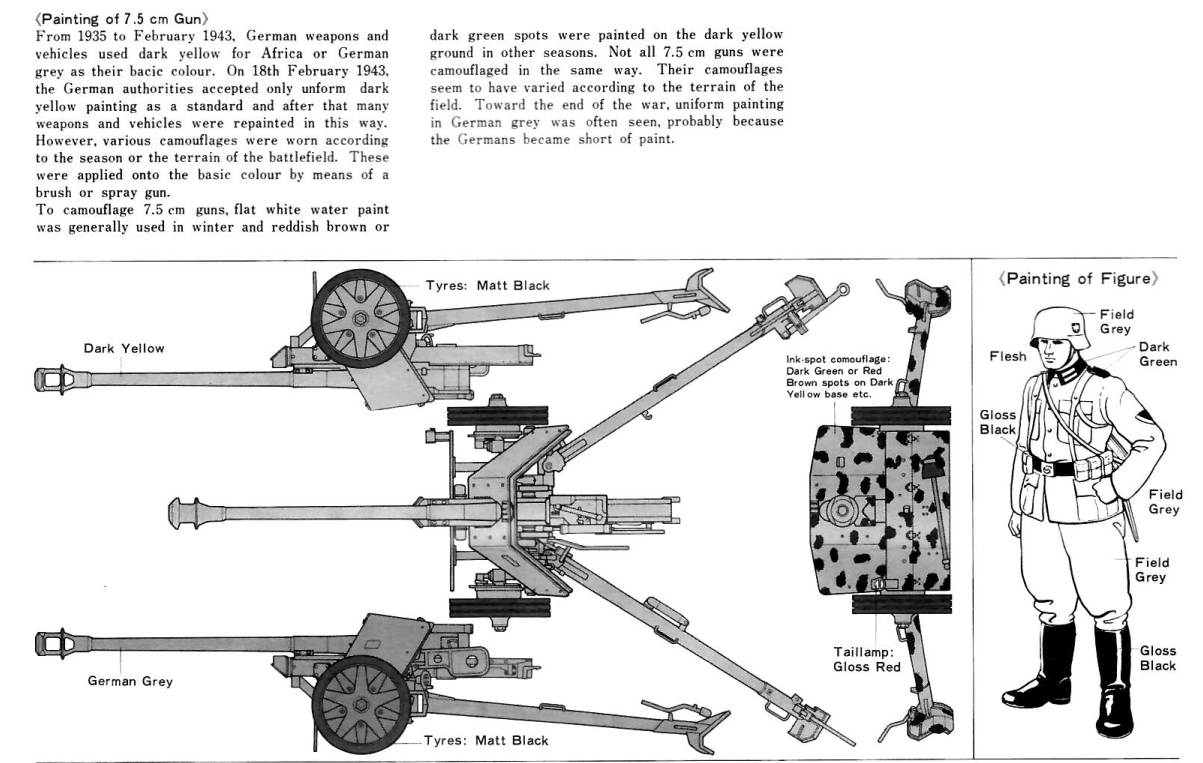
Finally, the instructions... I rarely have any significant issues with Tamiya instructions, and these are fine too. As usual, there is a Japanese and an English version.

The information is always informative.


We'll see it all again soon when I begin building. Look out for that coming soon.
Einheits-PKW der Wehrmacht, literally: "standard passenger motor-car of the Wehrmacht" was the Nazi German plan for a new, multi-purpose fleet of all wheel drive off-road vehicles, based on just three uniform chassis, specifically designed and built for the Wehrmacht (the Nazi military). The plan was formulated in 1934, and vehicles were built from 1936 to 1943.
Bit like a german Model T...
Einheits-PKW der Wehrmacht. Horch 4 X 4 Type 1a.

A quick undercoat of grey and we'll start on the subframe. 

Constructing the subframe,


It's a lovely little kit isn't it...

Adding a little shading...

It will need wheels I think...

Scraping the seams with a knife and sanding with emery cloth. I'll leave it rough...
Constructing the suspension...


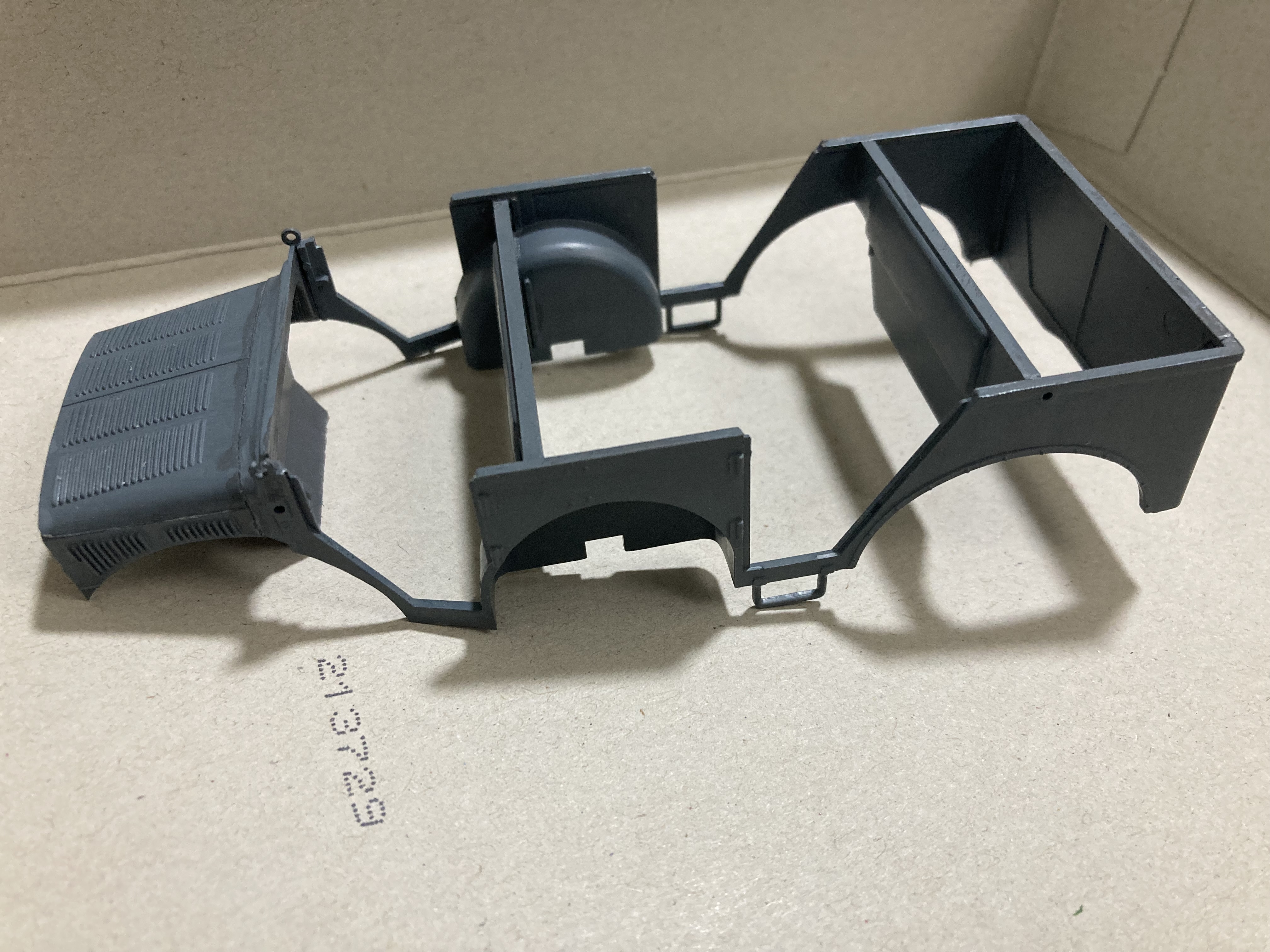
Putting the body together...
It's an opld kit but no filler needed here...
Building the shading with black, different shades of brown and white.


Adding the finishing touches.


Instead of the flakvirling, I added the Tamiya 1/35 75mm PAK 49/L46 .
Here is a photo record .
No story to this one, well maybe a little bit of info. A pictorial record of a model that never really got completed although it does guest in a different project... Guess I'd better do it again don't you think?
Looking at the box.
The gun was developed in 1939–1941 and entered service in 1942. With 23,303 examples produced, the Pak 40 formed the backbone of German anti-tank guns for the later part of World War II, mostly in towed form, but also on a number of self propelled artillery such as the Marder series of Panzerjäger.


The weapon was effective against almost every Allied tank until the end of the war, only struggling to penetrate heavier vehicles like the Russian IS tanks, the American M4A3E2 Sherman 'Jumbo' assault tank and M26 Pershing, and later variants of the British Churchill tank. The Pak 40 was much heavier than the Pak 38; its decreased mobility meant that it was difficult or even impossible to move without an artillery tractor on boggy ground.


- Caliber: 75 mm
- Barrel length: L/46
- Rifling: 32 grooves, right-hand increasing twist, 1/24 to 1/18.
- Length with the carriage: 6.2 metres (20 ft 4 in)
- Length: 3.70 metres (12 ft 1.7 in)
- Width: 2.0 metres (6 ft 7 in)
- Height: 1.25 metres (4 ft 1 in)
- Weight (combat ready): 1,425 kilograms (3,142 lb)
- Traverse: 65°
- Elevation: -5° to + 22°
- Rate of fire: 14 rounds per minute
- Engagement range: 1,800 metres (5,906 ft)
- Indirect range: 7,678 metres (25,190 ft) (HE shell)
- Projectile weight: 3.18 to 6.8 kg (7 lb 0.2 oz to 14 lb 15.9 oz)






 No, not that kind of barrel...


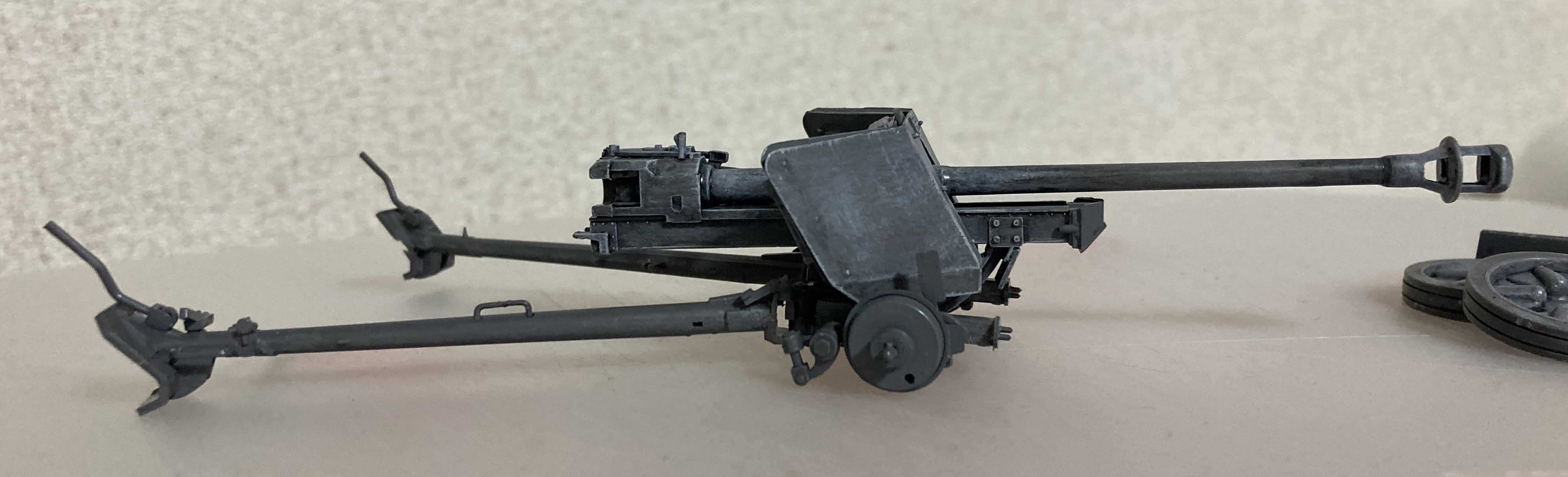


Adding some warm shades.


A few extra accessories and a base I think.
Perfect for towing my 75mm AT gun. (It was a bit of a squeeze though.)

Looks ok I think... 
Missing a little something or two...
Building a fence
A cover over the barrel...
...And I am done...
A final look at the model.
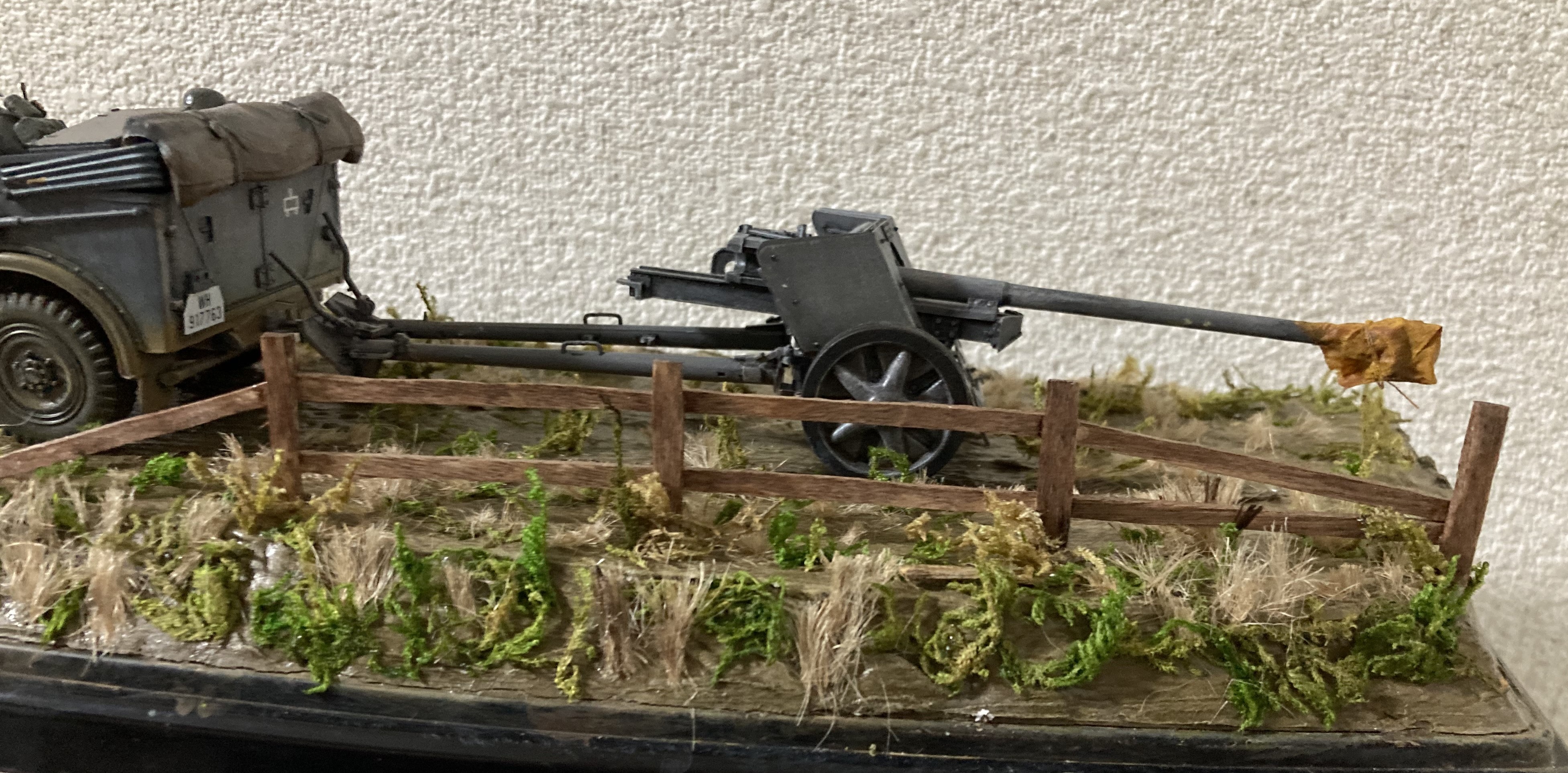
And we are all done...


No comments:
Post a Comment